

Summer School on Mathematics of Movement
SNS-NUST
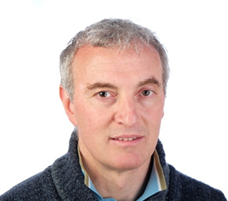
Instructor:
Professor Luca Giuggioli
Professor of Complexity Sciences
School of Engineering Mathematics & Technology, University of Bristol, UK
About the Instructor:
Luca Giuggioli is a Professor at the University of Bristol’s School of Engineering Mathematics and Technology, specialising in Complexity Sciences. He earned his PhD in 2004 from the Department of Physics and Astronomy at the University of New Mexico (UNM), USA. He then held postdoctoral positions at UNM’s Consortium of the Americas for Interdisciplinary Science (2004–2006) and at Princeton University’s Department of Ecology and Evolutionary Biology (2007–2008). He has been at the University of Bristol since October 2008.
Venue:
School of Natural Sciences, NUST H-12 Campus, Islamabad
Registration Deadline:
August 15, 2025
Registration Link:
https://forms.gle/EJe1RZk4i2SG3V977
Description:
This course offers an introduction to model theoretically random walks movement in space and time of agents, being they humans, biological organisms or robots, both in homogeneous and heterogeneous space. The focus is on the mathematical description of the random nature of movement paths (not on the physics of locomotion) and the interactions of a random walk with the heterogeneity of the environment and with fixed or moving targets. The lectures will cover mainly space-time discrete representations but connections to the space-time continuous variable representation will also be presented. Students will learn the conceptual and mathematical underpinnings of the equations that describe random movement in arbitrary dimensions and arbitrary topologies. Through lots of exercises during the lectures and as coursework in between lectures, students will have plenty of opportunities for a hands-on experience.
Course Outcomes:
- Understanding of fundamental transport concepts in statistical physics from diffusion and correlated movement to first-passage phenomena
- Ability to model random walk movement and basic interaction processes such as trapping, encounters, exclusion
- Ability to quantify the so-called first-passage, first-encounter and first-absorption processes
- Ability to represent the random walk dynamics in a heterogeneous environment
Intended Audience / Pre-requisites:
Undergraduate/Postgraduate students and Faculty with prior experience in linear algebra and calculus. Familiarity with probability concepts is helpful, but not required
Materials such as published papers and solved exercises will be made digitally available
Lecture Schedule:
September 1st – September 19th, 2025
Each lecture lasts approximately one hour
Start Time and Location:
10:00 AM, SNS- CR 303
| Week/Day | Topic |
|
Week 1 Monday, 1 September |
General introduction to model random movement and primer on generating functions and discrete Fourier transform |
|
Week 1 Wednesday, 3 September |
Master equation for a 1D diffusive lattice random walker |
|
Week 1 Friday, 5 September |
Master equation for a diffusive lattice random walker in hypercubic lattice in finite space |
|
Week 2 Monday, 8 September |
The defect technique for (partially) absorbing lattice sites |
|
Week 2 Wednesday, 10 September |
The renewal equation and first-passage processes |
|
Week 2 Friday, 12 September |
First-passage dynamics with multiple targets and first-encounter dynamics |
|
Week 3 Monday, 15 September |
The Master equation in the presence of spatial disorder |
|
Week 3 Wednesday, 17 September |
The Master equation for a one-step correlated lattice random walker |
|
Week 3 Friday, 19 September |
Relations of lattice random walks to the Fokker-Planck and diffusion equation for Brownian walks(space-time continuous variables) |
For more information, email: [email protected]